On-demand · Deutsche Börse Group Open Day 2026

Consistent by design: How sequencer architectures benefit exchange participants

What this session covers
Adaptive
  • The consistency trap: Why duplicating a monolith to scale silently breaks correctness, including how €1.2m ends up committed against a €1m limit and the three ways teams try to patch it.

  • One total order, without a monolith: How an explicit sequencer becomes a component of its own and hands every service the same ordered stream of events to act on.

  • Resilience for free: The four capabilities a deterministic total order gives you at no extra cost: replay, full audit observability, backtesting, and per-component upgrades.

  • High availability, honestly costed: How consensus replicates the sequence for durability and how state-machine replication keeps consumers live, with the latency trade-offs named out loud.

  • Taming the non-deterministic edge: Why sequencing intent before you send makes external venue communication durable and turns recovery into a simple diff.

  • Provable by design in the AI era: Why a bounded, single-threaded model is the practical way to let AI write trading logic you can still stand behind.
Watch the recording
One argument, built one event at a time

David starts with a problem every trading desk has hit: scaling out a monolith quietly breaks consistency. From there, he walks step by step to an architecture where one ordered stream of events replaces the monolith, without a single process owning every decision.

If you are interested in sequencer architectures, talk to us about your trading technology needs.

What this session covers
  • The consistency trap: Why duplicating a monolith to scale silently breaks correctness, including how €1.2m ends up committed against a €1m limit and the three ways teams try to patch it.

  • One total order, without a monolith: How an explicit sequencer becomes a component of its own and hands every service the same ordered stream of events to act on.

  • Resilience for free: The four capabilities a deterministic total order gives you at no extra cost: replay, full audit observability, backtesting, and per-component upgrades.

  • High availability, honestly costed: How consensus replicates the sequence for durability and how state-machine replication keeps consumers live, with the latency trade-offs named out loud.

  • Taming the non-deterministic edge: Why sequencing intent before you send makes external venue communication durable and turns recovery into a simple diff.

  • Provable by design in the AI era: Why a bounded, single-threaded model is the practical way to let AI write trading logic you can still stand behind.
Watch the recording
One argument, built one event at a time

David starts with a problem every trading desk has hit: scaling out a monolith quietly breaks consistency. From there, he walks step by step to an architecture where one ordered stream of events replaces the monolith, without a single process owning every decision.

If you are interested in sequencer architectures, talk to us about your trading technology needs.

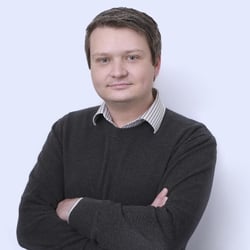
David Smith

David Smith
Global Head of Systems Engineering
Adaptive | Aeron

David leads systems engineering at Adaptive, where the team builds and runs trading systems on Aeron for exchanges, brokers and banks. In this session, presented at the Deutsche Börse Group Open Day, 24 September 2026, he draws on that production experience to show why sequencer architectures deliver consistency, resilience and provable behaviour across distributed trading platforms.

>> Connect with David

Further reading

Further reading